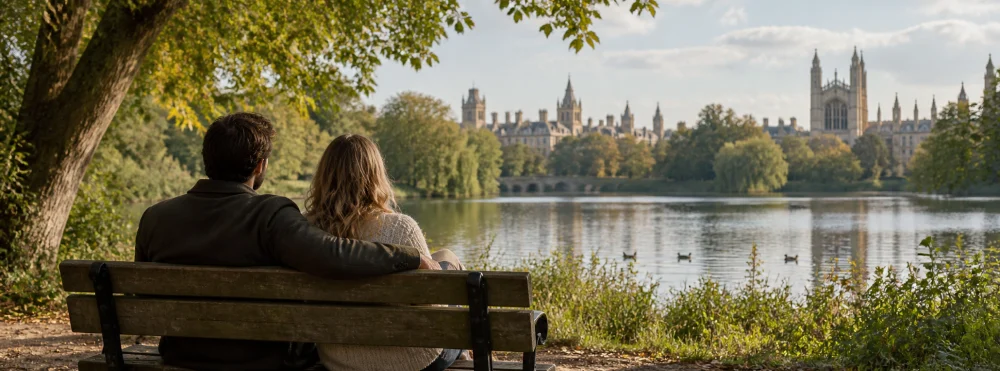
A comfortable first date starts with a modest plan: meet somewhere public, make your own travel plans, tell a trusted person where you will be, and leave room to decide how you feel. You do not need an elaborate evening or a promise about what happens next. For adults dating with herpes or another STI, an ordinary coffee can be an opportunity to enjoy someone's company without making your health the centre of the afternoon.
This guide brings UK personal-safety guidance together with practical planning ideas. The example timings and suggested messages are editorial suggestions, not research findings or rules you must follow. No checklist can guarantee safety, and responsibility for harmful behaviour always belongs to the person causing it.
At a glance: Choose a public venue that suits both people. Keep control of your journey home. Agree a check-in with someone you trust. Treat health conversations and physical intimacy as separate decisions from agreeing to meet. A short, pleasant date is a complete date.
Decide what this meeting is for
Your first meeting can answer one small question: do we enjoy talking in person? It does not need to establish whether this will become a relationship. That distinction matters when messaging has been warm and detailed. You can like the conversation online and still need time to find out how being together feels.
Choose a format that reflects your actual interests. If you dislike pubs, suggesting a pub because it seems conventional gives you an unnecessary obstacle. A daytime café, a staffed museum café or a relaxed lunch spot can offer things to talk about without demanding constant eye contact. Check opening times before offering a place; a closed venue can turn an easy plan into an awkward search.
Be honest about the amount of time you have. For example: “Would you like to meet for coffee on Saturday? I can do two until three.” This sets a natural endpoint without inventing another engagement. If you both want longer, you can discuss that later. Neither person has committed to an entire afternoon simply by accepting a drink.
Pick somewhere public and genuinely practical
Hertfordshire Constabulary advises a public first meeting, avoiding invitations to someone's home and lifts from your home. It also suggests considering a daytime date. These are useful starting points when choosing a venue, whether you live in a large city or travel in from a smaller town. Hertfordshire Constabulary: choosing a neutral meeting place.
“Public” is only the beginning of the decision. Look for somewhere that will actually have staff and other visitors at the agreed time. A picturesque location may be pleasant on a busy weekend and deserted on a weekday evening. For a walk, a staffed café can be a clearer meeting point than an isolated park gate. You can decide together whether to add a short walk after meeting.
Check the details that affect comfort: steps, accessible toilets, seating, noise, dietary options and distance from transport. You can ask, “Would a quieter place suit you?” without asking someone to explain a disability or medical history. If a particular accommodation matters to you, say what you need rather than apologising for having a preference.
A simple venue comparison
| Option | What may work well | What to check beforehand |
|---|---|---|
| Daytime café | A clear start and finish; an inexpensive order is possible | Opening hours, seating and background noise |
| Museum café | Conversation prompts nearby; a meeting can stay short | Entry fees, café access and closing time |
| Casual lunch | A familiar structure and space to talk | Menu prices, dietary choices and travel time |
| Busy park with a staffed café | Fresh air and a possible short walk | Weather, daylight, accessible paths and how busy it will be |
These are planning suggestions, not ratings of venue safety. Choose the actual place, time and route together. If the venue changes, you can pause and make a new decision rather than accepting a private alternative on the spot.
Keep the journey manageable
Independent travel gives you flexibility at both ends of the date. Northamptonshire Police recommends making your own way to and from a neutral, public meeting place. Its guidance also suggests a live video call before meeting. A call can help you decide whether you want to meet, but it is not proof of someone's identity or intentions. Northamptonshire Police: online dating safety advice.
For a UK train or bus journey, check the return service as well as the outward one. If the route is unfamiliar, save the station or stop name and allow time to find the entrance. A venue near transport can be more useful than somewhere precisely halfway between your homes. Discuss travel costs early if one person would otherwise face an expensive journey.
Keep enough money available for your own return. You can decline a lift warmly: “Thanks, I've got my journey sorted.” You do not need to share your home address to prove trust. If a disruption makes the return difficult, contact a trusted person or transport provider rather than feeling obliged to accept an overnight invitation.
Make one clear check-in plan
Tell someone you trust who you are meeting, where and when. The Suzy Lamplugh Trust recommends checking in before, during and after a date, carrying a charged phone and planning a way to leave. It also emphasises that safety advice cannot eliminate aggression or violence. Suzy Lamplugh Trust: Safety Online.
Make the check-in specific enough to be useful. An example message is: “I'm meeting Alex at the café on the station square at two. I'll text around three and again when I'm home.” Agree what your contact should do if you miss the check-in, and choose someone who will be available. Update them if the plan changes.
You can share the practical details of a date without sharing anyone's STI status. Your contact needs to know how to reach you and where you expect to be; they do not need the private health information exchanged in your messages. For more on handling sensitive details, read our dating profile privacy guide.

Keep the invitation clear and low pressure
A useful invitation includes a place, a time and a simple activity. “Coffee at the museum café on Sunday at eleven?” is easier to answer than an open-ended suggestion to do something soon. Offer an alternative if you genuinely have one, but avoid sending a long questionnaire before you have met.
Agree the scale of the date as well as its location. A coffee should not unexpectedly become an expensive meal or a ticketed event. Looking at the menu beforehand can make the budget conversation ordinary: “That café looks good; I'd prefer to keep it to coffee this time.” Paying for something never creates an obligation to stay, kiss or meet again.
Here is an example of a short date plan. Allow a few minutes to find the venue, spend roughly forty-five minutes talking, then leave time for your own journey. Those numbers are simply a workable starting point. A person who needs a shorter meeting, more rest or extra travel time can adapt the plan without explaining every reason.
Let conversation be broader than a diagnosis
Living with an STI may be one reason you found this community, but it does not determine the entire conversation. Ask about something specific you remember from their profile: a book, a favourite meal, a walking route or a skill they are learning. Share something of your own too, so the meeting does not become an interview.
You might find it helpful to have two ordinary topics in mind. That is enough preparation; you do not need a script for the whole date. A pause in conversation is not automatically a sign of incompatibility. Look around, take a sip, or return to something they mentioned earlier.
If health comes up, decide how much detail you want to discuss in that setting. A busy café may suit a brief acknowledgement but feel wrong for a personal history. You can say: “I'm happy to talk about that, but I'd prefer a little more privacy for the details.” Privacy does not have to mean going to someone's home. A later phone conversation can give both people more space. Our guide to talking about herpes explores wording and timing in greater depth.
Separate meeting, disclosure and intimacy
Agreeing to a date is not agreeing to physical intimacy. Sharing a diagnosis is not consent either. You can enjoy meeting someone while deciding that a kiss, another drink or a second location does not feel right. A simple “I'd like to take things slowly” is enough to communicate your preference.
Before sexual contact, make time to discuss sexual health and relevant precautions without pressure. For genital herpes, the NHS advises avoiding vaginal, anal and oral sex when there are sores or symptoms suggesting an outbreak. Condoms can reduce transmission risk but cannot cover every affected area. Individual questions belong with a sexual health clinician. NHS: genital herpes.
If you feel uncomfortable or unwell on the day, you can postpone. “I'm not feeling up to meeting today; could we try next weekend?” is a complete practical message. You do not owe detailed medical information to justify changing a social plan. Equally, another person's health disclosure is information to treat with care, not something to repeat to friends.
Notice whether your boundaries are respected
A useful sign during a date is how the other person responds to a small preference. Can you choose a non-alcoholic drink without debate? Can you finish at the time you agreed? Are your questions welcomed rather than mocked? You do not need to reach a verdict on their character, but you can notice how the interaction feels.
If someone presses for your address, private photographs or an immediate move to their home, you can decline without negotiating. The site's safety page brings together further guidance and reporting routes.
You may end a date simply because you do not want to continue. “Thank you for meeting me. I'm going to head off now” avoids a debate about whether your reason is good enough. If you feel unsafe, approach staff or other people and contact help. In the UK, call 999 for immediate danger; use 101 or an available police online reporting route for non-emergency matters. Police.uk: how to report.
Give yourself space afterwards
Send the check-in you agreed, then take a moment before deciding what comes next. Ask yourself whether you could speak comfortably, whether your preferences were respected and whether you are curious about another conversation. You do not have to evaluate the date against an imagined perfect relationship.
If you would like to meet again, be direct: “I enjoyed talking with you. Would you like to do this again next week?” If you do not, a short, respectful message can close the conversation. You do not need to debate your decision. Keep any health information they shared private, regardless of whether you continue dating.
Questions people often have
How long should a first meeting last?
There is no required duration. An hour can be a useful planning example for coffee, but choose a timeframe that suits your energy, budget and travel. A short meeting can still tell you whether you would enjoy another one.
Do we need to discuss an STI over coffee?
You can choose a suitable time for a health conversation rather than making it the opening topic. Discuss relevant sexual-health information and precautions before sexual contact, with room for questions. A clinician can help with medical questions; a date should not pressure you to improvise answers.
What if we met through an STI dating community?
Do not assume shared interests or a similar diagnosis mean you know someone's intentions, identity or boundaries. Use the same care with travel, privacy and consent. Our FAQ explains the website's scope, and the blog collection offers more practical reading.
Sources and editorial notes
Sources accessed 9 September 2026. This is practical editorial guidance for adults, not an individual medical assessment. Illustrative photographs do not identify members or imply anything about the health of the people pictured.
- Hertfordshire Constabulary — Opt for a neutral meeting place: public venues and daytime meetings.
- Northamptonshire Police — Online dating safety advice: independent travel and live video calls.
- Suzy Lamplugh Trust — Safety Online: check-ins, phone preparation and the limits of personal-safety precautions; updated 29 May 2025.
- NHS — Genital herpes: symptoms and transmission precautions.
- Police.uk — How to report: emergency and non-emergency reporting.